


Most supplier problems are not capability problems but authority problems: the person who promised the date, the price and the concession had no power to commit the factory to any of them. Mapping who signs what, before the first order, is a fifteen-minute exercise that prevents a year of polite emails going nowhere. This guide gives badminton rackets buyers a way to find where decisions actually live inside a supplier.
Decision rights are invisible in a quotation and decisive in a relationship: the sales engineer who answers every email enthusiastically may be the last person in the building whose opinion reaches the production meeting.
As a manufacturer based in China, æå·ä¹æª¬è¿åºå£æéå ¬å¸ (www.factoryracket.com) supplies badminton rackets, Shuttlecocks, Tennis Rackets and related products to customers in more than forty markets. In this guide we explain what actually determines quality in this category, how to assess a factory before you commit, and how to build a supply relationship that holds up over years of repeat ordering.
Before you send a request for quotation, be precise about what you are buying. These are the questions that separate a professional sourcing decision from a hopeful one.
What is the production capacity and current lead time? A factory that cannot state monthly capacity in units cannot forecast reliably.
Which quality standards apply, and can they evidence compliance? Ask for BWF Laws of Badminton, ISO 9001 documentation rather than a verbal claim.
Is material traceability documented? Certificates of material origin prevent costly surprises.
What is the defect rate and how are returns handled? Ask for historical data, not a policy statement.
Can they customize to your market's specification? Voltage, sizing, labelling and packaging often differ by country.
What after-sales support is included? Spare parts availability and technical support determine lifetime cost.
What is the total landed cost? Freight, duty and durability matter more than FOB price.
Quality in badminton and racket sports equipment is the sum of four things: material selection, manufacturing precision, assembly consistency, and testing discipline. A product can look identical to a competitor and behave completely differently after six months in service if any one of these is weaker.
Material grade: the raw material must match the specification, with certificates to prove it.
Manufacturing precision: tolerances must hold across the production run, not just the sample.
Assembly consistency: repeatable processes prevent batch-to-batch variation.
Testing discipline: functional and safety testing must be routine, not exceptional.
For buyers, the practical implication is that you should evaluate capability rather than appearance. A well-equipped factory with documented processes will out-perform a low-cost workshop every time, even if the sample products look the same.
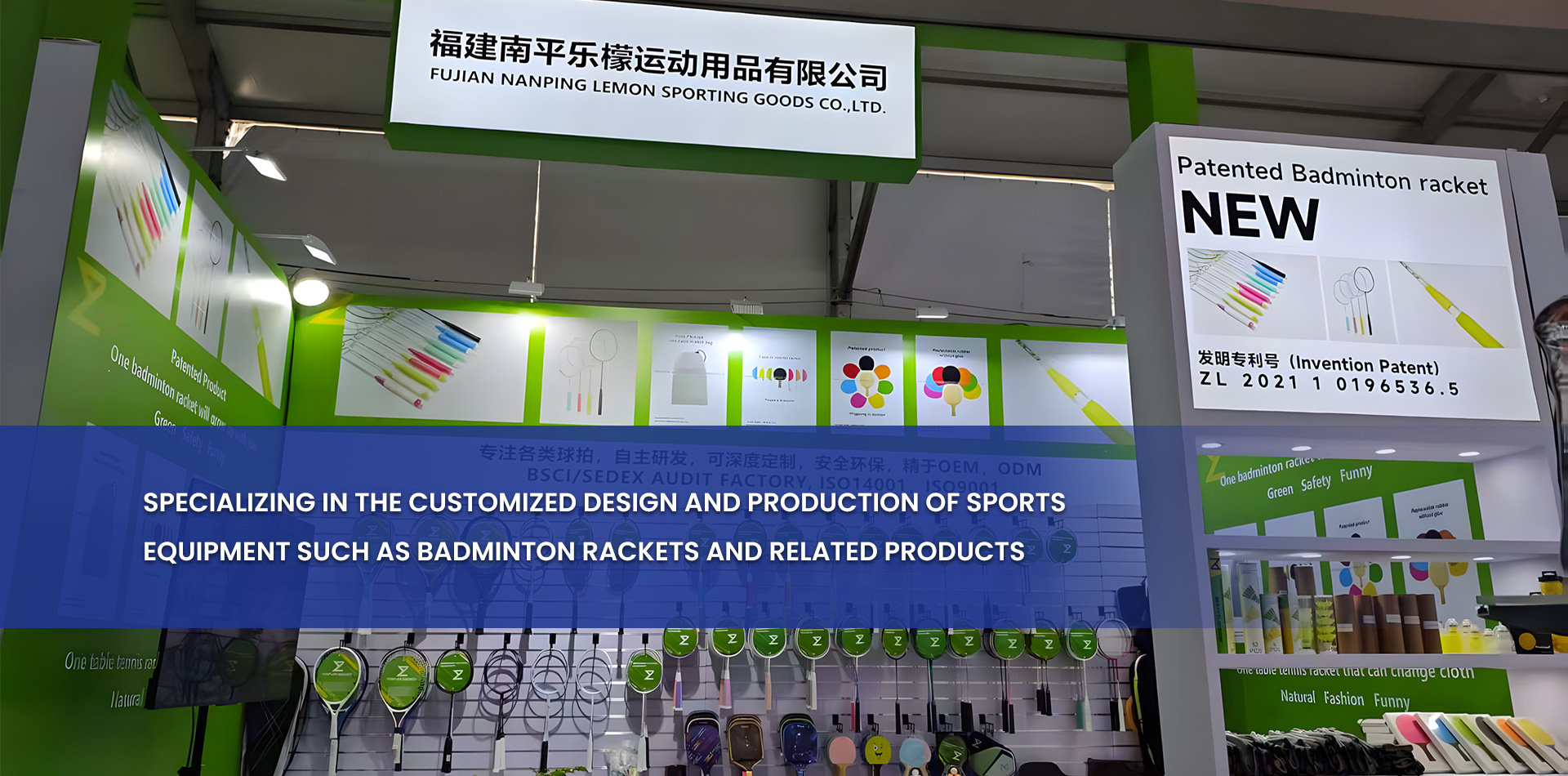
We recommend auditing five dimensions before the first paid order.
Ask for facility size, equipment list, monthly output, and the number of production lines. A factory that can describe its bottleneck process understands its own capacity. Request photos or a live video walkthrough of the production floor.
Confirm certification such as BWF approval, ISO 9001:2015 and ask to see the internal inspection records. A genuine quality system produces documents: incoming material checks, in-process checks, and final inspection reports.
Understand where raw materials come from and how they are verified. Vertically integrated suppliers control more of the quality chain and are less exposed to sub-supplier problems.
Ask which tests are performed in-house and which are outsourced to third parties. For export markets, third-party test reports from recognised laboratories carry more weight than internal claims.
Evaluate responsiveness during the quotation stage â it is a good predictor of post-sale behaviour. Ask about spare parts availability, technical documentation, and warranty terms in writing.
Most buyers eventually want their own branding, and the best time to discuss it is before the first order. Typical customization includes product sizing, colour, labelling, packaging, and documentation.
Product customization: dimensions, capacity, voltage and configuration tailored to your market.
Branding: logo marking, silk-screen printing, embossing or laser marking.
Packaging: neutral, retail-ready or private-label cartons with your barcode and compliance text.
Documentation: user manuals and compliance statements in your market's language.
Discuss minimum order quantities for customized runs early, because decoration and tooling often set a higher MOQ than the base product.
Unit price is only one part of the equation. The lowest quote frequently carries the highest total cost once durability, freight and returns are included.
| Cost Factor | What to Compare | Hidden Risk |
|---|---|---|
| Unit price | FOB per unit | Ignoring specification differences |
| Durability | Service life | Premature failure and warranty claims |
| Freight | Volumetric weight | Light but bulky shipments cost more |
| Duty and compliance | HS code and certification | Clearance delays |
| Returns | Defect rate | Reputational damage |
| Support | Spare parts and service | Downtime for your customer |
Build a landed-cost model and negotiate on the total. Suppliers respect buyers who understand their cost drivers because it signals a long-term relationship.
The best pricing and priority allocation go to buyers who order predictably. Share a rolling forecast, place consistent orders, and give clear feedback on quality. Factories reward reliable partners with better lead times and preferential treatment when capacity is tight.
It also helps to visit the factory when practical. A single visit reveals more about capability than months of email.
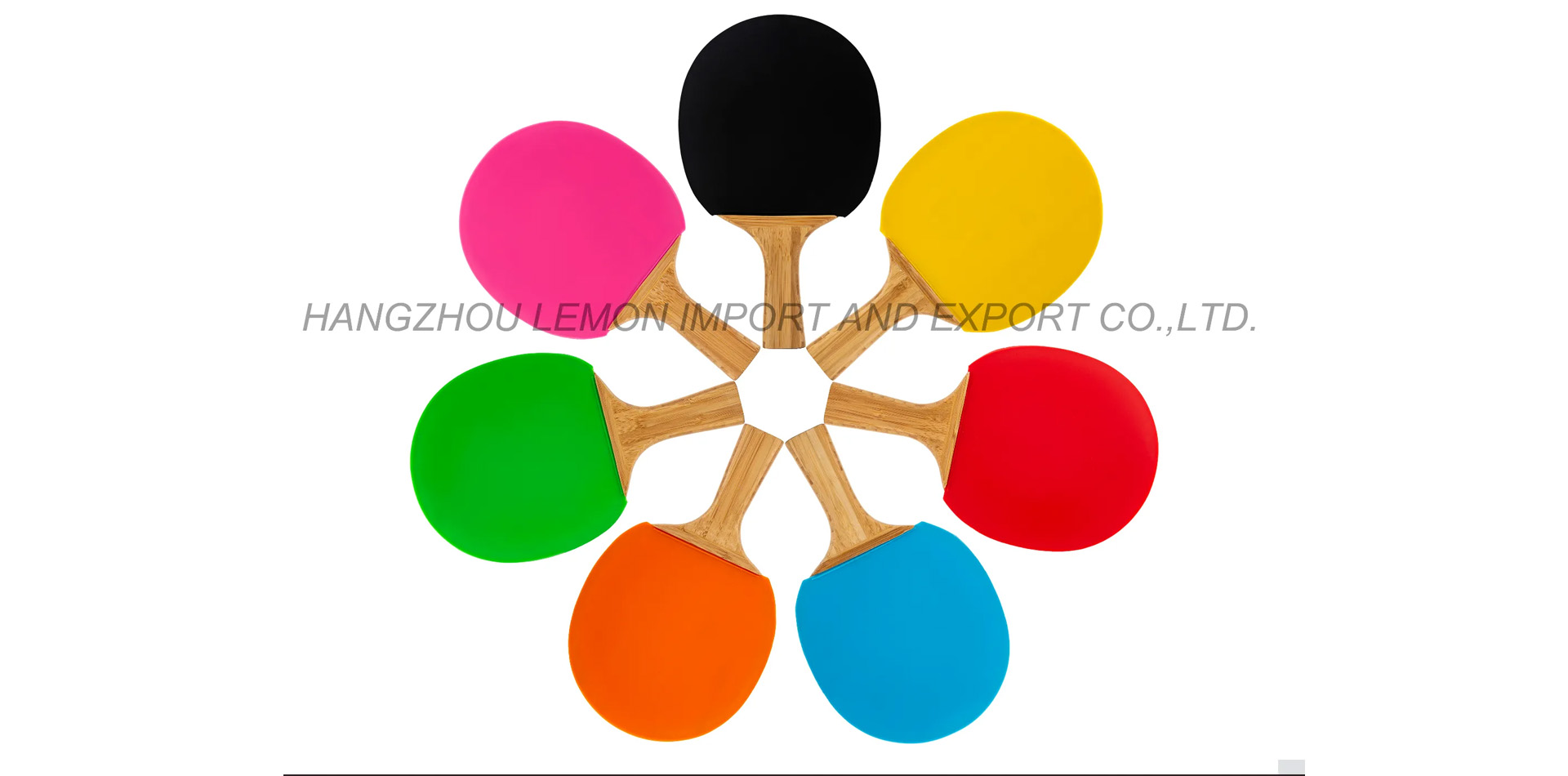
Not every supplier is the same kind of business. Understanding the model helps you choose the one that fits your needs.
| Supplier Type | Control Over Quality | Price Level | Best For | Main Risk |
|---|---|---|---|---|
| Direct factory | Highest | Competitive | Volume buyers | Higher MOQ |
| Trading company | Medium | Higher | Small or mixed orders | Less quality control |
| OEM/ODM partner | High | Competitive | Brand owners | Development time |
| Distributor | Low | Highest | Urgent small orders | Limited customization |
For most buyers building a brand or a stable catalogue, a direct factory with genuine customization capability offers the best balance of quality control, price and flexibility.
Depending on your destination market, several standards and certifications may apply to badminton and racket sports equipment. Confirming them early prevents costly compliance surprises.
BWF Laws of Badminton: confirm the factory can supply documentation for this standard where it applies to your market.
ISO 9001: confirm the factory can supply documentation for this standard where it applies to your market.
CE: confirm the factory can supply documentation for this standard where it applies to your market.
REACH: confirm the factory can supply documentation for this standard where it applies to your market.
BWF approval: request the certificate and verify its validity and scope.
ISO 9001:2015: request the certificate and verify its validity and scope.
CE: request the certificate and verify its validity and scope.
A structured process reduces risk far more than a clever negotiation.
Define your technical specification and target market requirements.
Shortlist three suppliers and request capability data and references.
Order paid samples and test them against your specification.
Audit the chosen factory against the five dimensions above.
Agree pricing, MOQ, packaging and lead times in writing.
Place a trial order and inspect the shipment on arrival.
Review performance with real customers before scaling.
Lock in capacity and lead times for the coming season.

The five decisions that determine whether a promise survives contact with production, and how to confirm each has an owner with authority:
| Decision | Who Usually Claims It | Who Must Actually Own It |
|---|---|---|
| Accepting an order into the schedule | Sales, verbally, on the call | Planning, in the scheduling system, with a date the factory will defend |
| Approving a deviation from specification | Quality, after the fact | Quality plus the buyer, before the batch is released |
| Committing a delivery date | Sales, optimistically | Production planning, against a booked slot rather than a hope |
| Changing a sub-supplier or material | Purchasing, quietly | A named engineer with change-control authority and a test file |
| Authorising overtime or a second shift to recover | Nobody, until it is too late | The plant manager, with a cost the factory is willing to absorb |
The pattern to look for is the gap between the person who speaks to you and the person who controls the answer. In well-run factories those are different people and the handover is routine: the sales engineer walks the order into planning, planning confirms a slot, quality signs the specification, and the buyer receives one date that three functions have already agreed. In factories where the gap is wide, the buyer receives a date from someone who cannot commit the factory to it, and the first sign of trouble is a week of silence followed by an apology. The practical test costs one question on the next call: ask who inside the factory signs the production slot, then ask to be copied on that confirmation. A supplier who can answer without hesitating has a decision map; one who cannot has a sales process. Neither answer is fatal at the outset, but only one of them can be relied on for badminton rackets volume, and the difference shows up in month four rather than month one.
MOQ depends on the product and level of customization. Standard configurations typically start lower than private-label runs, which may require tooling or dedicated production. Ask the factory for a clear MOQ schedule by SKU.
A first order typically takes three to six weeks including sampling and approval, while repeat orders are usually shorter. Peak season can extend lead times, so plan ahead.
Order paid samples from at least two production batches, test them against your specification, and require a pre-shipment inspection before release. Documented inspection is more reliable than any sample alone.
Yes. Most manufacturers of badminton and racket sports equipment offer customization of size, colour, branding and packaging. Discuss the MOQ implications before committing.
At minimum, expect BWF approval, ISO 9001:2015, CE. The exact requirement depends on your destination market and the application.
Compare landed cost per unit of service life, not FOB price alone. Include freight, duty, defect rate and spare parts in the calculation.
A reliable manufacturer maintains a spare parts inventory and provides technical documentation and support. Confirm the terms in writing before ordering.
Begin with a trial order, measure performance honestly, and share feedback. Consistent ordering earns better pricing and priority.
Most of what a buyer learns in a supplier conversation arrives in the gaps rather than the sentences. The answers are prepared; the silences are not, which is why they carry more information per second:
A question answered with a brochure is a question that was not answered: when you ask about capacity and receive a company profile, the profile is not the answer â it is the substitute for one, and the substitution was chosen deliberately.
Speed and specificity move together: a supplier who knows their business answers narrow questions narrowly and fast; one who answers broadly and slowly is either searching for the answer or deciding how much of it to give you.
Watch which questions come back: a supplier who asks about your volumes, your specification and your destination is qualifying the work; one who asks only about price expectations is qualifying the margin.
The pause before a reassurance is the finding: 'we have never had that problem' delivered after a hesitation is a memory being searched, and the search itself is the answer you needed.
Written silence is louder than spoken silence: a question asked twice by email and answered once by phone is a question the supplier does not want in the record â and the record is exactly where you need it.
The skill is not suspicion but structure: ask the same five questions of every candidate, in the same order, and write the answers down verbatim. The comparison then does the work that intuition would otherwise do badly, because a pattern of evasion across three suppliers is visible on paper and invisible in memory. Buyers who keep these notes discover a second benefit within a year â the questions that consistently produce silence are the questions that predict problems, which turns a vague instinct into a repeatable screen for badminton rackets sourcing.

Draw the map with four questions and one page:
Who can say yes to an order without asking anyone? the boundary of that authority is the real size of the supplier you are dealing with, whatever the letterhead says.
Who can move a delivery date, and what do they trade to do it? a planner who can pull your order forward by displacing another customer is a planner with power; one who can only apologise is a messenger.
Who signs a concession on a nonconforming batch? if the answer is the quality manager alone, the commercial pressure has somewhere to go; if it is the plant manager, quality has a ceiling.
Who owns the relationship when your contact leaves? a named second person, briefed and introduced, is the difference between continuity and a restart â and the restart costs a quarter.
Then write the escalation path into the contract: names, roles and response times, because an escalation route discovered during a dispute is a route that does not exist.
The map is uncomfortable for suppliers who run on personality, which is precisely why it is worth drawing: the factory where one owner decides everything can be fast and flexible for years and then become unmanageable in a single quarter, when that owner is ill, distracted or selling. Buyers should not treat centralised authority as a defect â many excellent suppliers are run that way â but they should know which decisions depend on one person and price that dependency into their contingency. The practical output is a page in the supplier file: five decisions, five names, and a date when the page was last confirmed. It takes one meeting to produce and it answers the question every buyer asks at the worst possible moment, which is who do I call now.
Capacity is arithmetic, and the arithmetic is available if you ask for it in the right units:
| Question | What It Converts | What a Weak Answer Sounds Like |
|---|---|---|
| How many shifts run, and for how many hours per shift? | Available machine hours before overtime | 'We can flex up whenever needed' â flexing is a cost, not a capacity |
| What is the changeover time between our product and the one before it? | Effective hours after setup losses | A number far below the observed pattern, or none at all |
| Which machine is the constraint, and what is its utilisation now? | The ceiling on everything downstream | No named constraint, which means capacity is a feeling |
| How much of the month is already committed to booked orders? | Free capacity in the period you need | A percentage that does not reconcile with the delivery dates quoted |
| What is your measured OEE on that line, last quarter? | The gap between hours paid for and units produced | Availability quoted as if it were output |
Three of these five answers can be checked against documents the supplier already has â the shift roster, the maintenance log, the production report â and the check is not an audit, it is a conversation with a calculator on the table. The purpose is not to catch anyone out; it is to replace a claim with a number the buyer and the supplier both accept, so that a volume increase becomes a planning discussion rather than a hopeful request. Buyers who run this interview once per critical category usually find that quoted capacity was 15 to 30 percent above what the factory could ship in the same month, and that the gap was not dishonesty but unexamined arithmetic. Knowing the real number changes how a badminton rackets order book is built, and it changes it before the first late shipment rather than after it.
Every supply relationship has a volume at which something structural gives way, and it is rarely the thing the supplier names. The question is worth asking before the increase, because the answer determines whether growth is absorbed or endured:
Ask which resource runs out first â and expect three answers: machine hours, skilled operators, or the person who signs the inspection reports â because factories usually expand equipment before they expand the function that releases product.
Test the sub-tier, not the factory: doubling output doubles material demand, and a second-tier supplier who was comfortable at the old volume is the most common silent constraint in the whole chain.
Price the changeover penalty: higher volume usually means more frequent runs of your product and fewer of everything else, which can reduce total cost while increasing the factory's scheduling difficulty â a trade the supplier will want to discuss.
Check the quality system's throughput: inspection, testing and documentation all have capacity, and a lab that was sized for one batch a week becomes the bottleneck at two â invisibly, because the queue looks like diligence.
Agree the step, not the promise: a documented increase in two stages with a review between them converts an optimistic commitment into a managed ramp, and it gives the supplier permission to say what they need.
The question's value is that it produces a list rather than a reassurance, and a list can be planned against. Suppliers who answer it well usually volunteer the constraint they are already worried about â a press, a welder, a curing oven, a tester â and that disclosure is worth more than any capacity certificate, because it tells the buyer where the money would have to go. Buyers who ask it before a volume increase frequently discover that the increase is achievable in eighteen months rather than in six, which is a far better thing to learn in a planning meeting than in a customer escalation. Ask it once a year, write the answer down, and compare: a supplier whose constraint changes every year is investing, while one whose constraint never moves is not growing at all.
Difficult is not the same as demanding, and suppliers price the difference into everything they quote:
Constant specification changes mid-order: each change consumes engineering time and re-planning, and the cost is recovered either in the next quotation or in the attention your order does not receive.
Inspections that become negotiations: a buyer whose acceptance criteria move after the goods are made teaches the supplier to add contingency â a line that appears in the price and never in the explanation.
Payment behaviour that requires chasing: a supplier who must telephone for every invoice builds the cost of that telephone call into the price of the next order, and will allocate capacity to the customer who does not call.
Escalation as a first instrument: buyers who go to the top over small problems get fast responses and poor information, because the organisation learns to manage the relationship rather than the work.
The honest version of the same behaviour: a clear specification, a fixed acceptance criterion, payment on the agreed date and escalation reserved for genuine failures â the supplier's cost of serving you falls, and some of that fall belongs to you.
The economics are asymmetric in a way buyers rarely see: being difficult saves a little time in the short term and costs a percentage of price and a share of attention in the long term, and neither of those appears on any document. This is not an argument for passivity â demanding, precise and firm is exactly what a good customer is â but for distinguishing between pressure applied to the work and pressure applied to the relationship. Suppliers describe the difference precisely when asked: the difficult customer is the one whose requirements move, whose approvals arrive late and whose problems travel upward before they travel across. Buyers who want better prices and better service have more leverage in being predictable than in being feared.

Every supplier keeps a version of this file, whether or not it is written down, and the ranking decides who gets capacity in a tight month:
Payment reliability beats payment speed: a customer who pays in sixty days on the day, every time, is easier to plan around than one who pays in thirty days eventually â and planning is what a factory does with its capacity.
Forecast credibility is a payment-adjacent asset: a buyer whose forecasts materialise is a buyer whose material gets pre-ordered, and pre-ordered material is shorter lead time at no extra cost.
Order stability is priced: regular volumes in predictable patterns let a factory schedule efficiently, and the efficiency is shared â sometimes as price, more often as priority during a crunch.
Documentation discipline shortens your cash cycle and theirs: clean purchase orders, confirmed specifications and complete shipping instructions remove the disputes that delay everyone's payment.
Ask what your ranking is: a direct question â 'where do we sit in your allocation order when capacity is tight, and what would move us up' â produces an answer most buyers never hear, and the answer is a roadmap.
The file's usefulness is that it explains outcomes buyers usually attribute to luck: why one customer's order sails on time in a busy quarter while another's slips three weeks, why a price increase arrives at one account and not another. None of it is personal; it is the arithmetic of planning risk. Buyers who want better treatment can improve their position faster by being plannable than by being persuasive â a twelve-month volume indication, payment on the agreed date, and a specification that does not move mid-order will do more for badminton rackets lead times than any escalation. And the question about ranking is worth asking aloud, because suppliers rarely volunteer that they have one, and almost always answer honestly when asked directly.
Ask who owns the production slot, not who owns the account. The sales contact can request a date; only planning can commit one, and the difference shows up the first time two customers want the same week. Request confirmation from the planning function in writing at order acceptance, and note the name â because when a date slips, the useful conversation is with the person who moved it, and the useless one is with the person who promised it.
A stable rate at a low level indicates a process under control; a stable rate at a high level indicates a process that has been normalised around its losses, which is worse than a rising rate somebody is trying to fix. Ask what changed in the quarter a number moved, and ask for the top defect class by cost. A factory that can name both is measuring itself. One that reports a percentage with no classification is reporting a feeling with a decimal point.
Work backwards from the carrier's documentation cut-off, set an internal cut-off two working days earlier, and place inspection and stuffing before that line rather than after. In practice this means starting the document set at order confirmation and booking inspection against the production completion date. The buffer is not padding â it absorbs exactly one normal problem, which is the number a shipment usually has.
Control and signal interfaces, and maintenance access. A unit can fit its flange, run on the right voltage and still fail commissioning because the protocol, address range or fail-safe behaviour was never stated â or because nobody checked that a filter could be changed without dismantling a guard. The register that lists every connection with an owner and a verification method catches both, and it takes an hour to build.
Rebuild the price from its components, obtain one credible alternative quotation for the same specification, and compare service terms alongside unit price. Then tell the incumbent what you found and ask them to respond. Most either correct the price or explain the difference â a material grade, a certification, a service level â and both outcomes are better than a silent audit that changes nothing. Run it on a published cycle so it reads as routine rather than as suspicion.
If you are sourcing badminton and racket sports equipment for distribution, OEM production or a project, æå·ä¹æª¬è¿åºå£æéå ¬å¸ (www.factoryracket.com) would be glad to share our experience and provide samples. Visit www.factoryracket.com to explore the catalogue, request a quotation, and discuss customization for your market.
This website uses cookies to ensure you get the best experience on our website.


 Español
 Pусский
 Français
 日本語
 한국어
 العربية
 हिन्दी
 Tiếng Việt
 中文



 Phone
Comment
(0)