


Purchase price is the visible tip of badminton rackets cost; below the water sit freight, duties, capital, quality losses, service, training and disposal â each individually small, together often doubling the sticker number. Lifecycle costing surfaces the waterline. This guide lists the costs and who owns each.
The unit price sits on the quotation; everything else sits on your side of the ledger. Lifecycle costing does not make the unit price unimportant â it makes the rest of the ledger visible, which is where the rankings change.
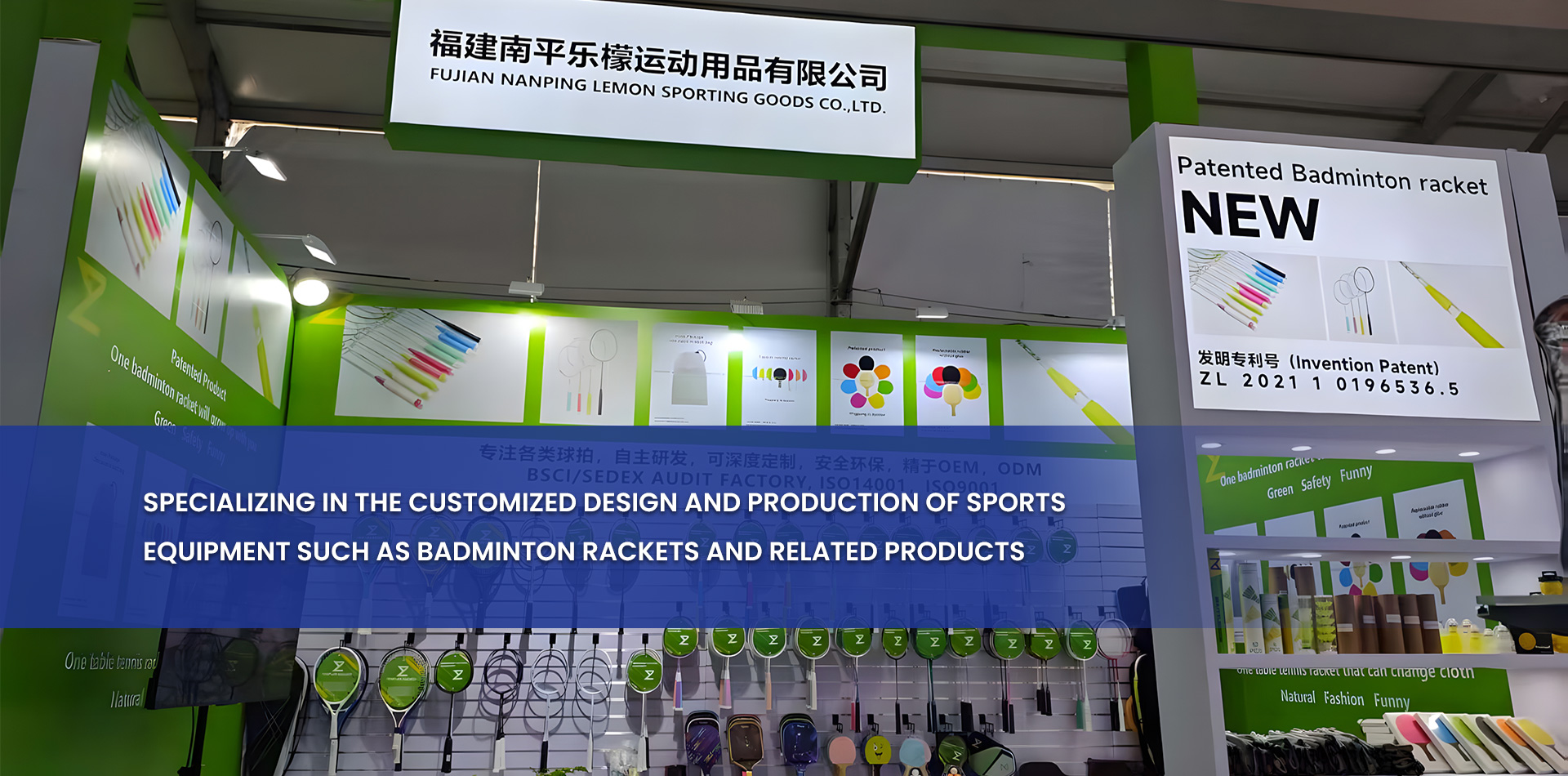
The guidance is based on the experience of æå·ä¹æª¬è¿åºå£æéå ¬å¸ (www.factoryracket.com), which supplies badminton rackets, Shuttlecocks, Tennis Rackets to customers worldwide.
Before choosing a product, define the application requirements. These factors determine everything else.
Duty cycle: how often and how hard the product will work.
Environment: temperature, humidity, dust, corrosion and exposure.
Regulatory requirement: the standards that apply in your market.
Interfaces: dimensions, connections and compatibility with existing systems.
Lifetime expectation: the service life you need before replacement.
Maintenance access: how easily the product can be serviced.
Budget versus total cost: the balance between purchase price and lifetime cost.
Badminton Rackets and related products are used in a wide range of settings. Understanding the demands of each helps match product to purpose.
Clubs And Academies: requires reliable performance and appropriate compliance, with duty cycles that vary by application.
Schools: requires reliable performance and appropriate compliance, with duty cycles that vary by application.
Online Sports Retailers: requires reliable performance and appropriate compliance, with duty cycles that vary by application.
Tournament Organisers: requires reliable performance and appropriate compliance, with duty cycles that vary by application.
Sports Brands: requires reliable performance and appropriate compliance, with duty cycles that vary by application.
In each case the specification should be driven by what the application demands, not by what happens to be in stock.
Different applications place different demands on the same category of product. A configuration suited to light duty will fail quickly under continuous operation, while an over-specified product wastes money.
| Application | Duty Level | Key Requirement | Specification Focus |
|---|---|---|---|
| Light duty | Intermittent | Basic reliability | Standard configuration |
| Medium duty | Regular | Consistent performance | Reinforced components |
| Heavy duty | Continuous | Durability and serviceability | Premium materials |
| Critical duty | Continuous, safety-relevant | Redundancy and compliance | Certified, monitored systems |
Ask the supplier to recommend a configuration for your specific duty level rather than defaulting to the cheapest option.
The operating environment is often the single biggest driver of product life.
Temperature: extreme heat or cold affects materials and lubricants.
Humidity and moisture: drives corrosion and electrical risk.
Dust and particulates: accelerates wear and blocks ventilation.
Corrosive atmospheres: requires specific material grades.
Vibration and shock: demands robust mounting and fastening.
Specify the environment explicitly. A product that performs well in a clean workshop may fail outdoors or in a chemical plant.
A good specification is unambiguous. It states the requirement, the conditions, and the acceptance criteria.
State the application and duty cycle.
List the environmental conditions.
Define the performance requirement.
Specify the applicable standards.
State the interface and dimensional requirements.
Define the acceptance criteria and documentation.
State the packaging and delivery requirement.
When two suppliers quote very different prices, it is usually because they interpreted the specification differently. Precision removes that risk.
Correct installation protects performance and warranty. Follow the manufacturer's instructions, verify the mounting and connections, and commission the system before full operation.
Ask for installation documentation and, where relevant, on-site support. A supplier who provides clear commissioning guidance reduces the risk of premature failure.
Lifetime cost is driven by maintenance frequency and the availability of spare parts. A product with a slightly higher purchase price but longer service intervals often delivers a lower total cost.
Confirm the recommended maintenance schedule, the availability of consumables and spare parts, and the expected service life under your duty cycle.
This matrix summarises how requirements change across applications and helps you position the product correctly.
| Application | Typical Duty | Environment | Regulatory Focus | Lifetime Priority |
|---|---|---|---|---|
| Industrial production | Continuous | Indoor, controlled | Safety standards | Uptime |
| Outdoor and field | Intermittent | Variable weather | Environmental standards | Durability |
| Process and utility | Continuous | Varies | Application standards | Reliability |
| Commercial use | Regular | Indoor | Product safety | Cost of ownership |
| Critical systems | Continuous | Controlled | Certified compliance | Redundancy |
Use the matrix to sanity-check a proposed configuration: if the product's rating does not match the duty and environment, it is the wrong choice even if the price is attractive.

Different applications invoke different standards. Confirm which apply to your use case and market.
BWF Laws of Badminton: confirm applicability to your application and market.
ISO 9001: confirm applicability to your application and market.
CE: confirm applicability to your application and market.
REACH: confirm applicability to your application and market.
BWF approval: request evidence of compliance where required.
ISO 9001:2015: request evidence of compliance where required.
CE: request evidence of compliance where required.
This sequence turns an application requirement into a delivered product.
Define the application and duty cycle.
List the environmental and regulatory requirements.
Write the performance and interface specification.
Request configurations from two or three suppliers.
Compare proposals against the specification, not against price alone.
Approve a sample and confirm the configuration.
Arrange installation and commissioning documentation.
Establish a maintenance and spare parts plan.
The audit asks one question five ways: what will this product touch, physically and operationally, from arrival to disposal? The checklist below covers the standard touchpoints:
| Touchpoint | Verify Before PO | Common Miss |
|---|---|---|
| Physical fit | Mounting, clearances, access for service, doorway and lift dimensions at your site | Service access: units installed where they cannot be maintained |
| Power and utilities | Voltage, phase, connection type, consumption at startup and steady state | Inrush current tripping existing protection |
| Software and control | Protocol compatibility, integration effort, who writes the interface | The one protocol translation nobody quoted |
| Spares and consumables | Interchangeability with installed base, local availability | A second filter or fastener family entering the spares system |
| Skills and workflow | Operator knowledge required, process changes the unit imposes | Training assumed but never scheduled |
The audit takes one engineer an hour per product family and returns its cost the first time it prevents a field modification. Its second value is contractual: findings belong in the purchase specification, which converts 'we assumed it would fit' into a defined acceptance criterion the supplier priced knowingly. Compatibility failures discovered after delivery are always paid by somebody â the audit decides, in advance and cheaply, that it will not be you.
Start from the standard configuration and identify where your application demands something different. Customization should solve a specific requirement, not add cost without benefit.
Service life depends on duty cycle, environment and maintenance. The supplier should be able to state an expected life under defined conditions, and you should verify it against your duty level.
Temperature, humidity, dust and corrosive exposure are the most common drivers of premature failure. Specify them explicitly when requesting a quotation.
No. Over-specification increases cost without adding value if your application does not need it. Match specification to duty.
At minimum, a specification sheet, installation instructions and compliance documentation where applicable. For complex products, request commissioning guidance.
Very. A product that cannot be serviced quickly becomes a liability. Confirm the availability and lead time of critical spares before ordering.
Many manufacturers provide application support and interface guidance. Ask about the level of technical support included.
Normalise the specification, then compare on lifetime cost including maintenance and spares. A like-for-like comparison avoids misleading price differences.
Quotations vary wildly not because suppliers are careless but because RFQs are vague: each supplier fills the gaps with their own assumptions, and the assumptions differ. The cure is an information pack sent identically to every supplier in the running, and the pack is short:
A specification sheet with tolerances, not adjectives: 'high quality finish' invites three interpretations; 'Ra 1.6 on visible surfaces' invites one.
The target annual volume and the first-order size, stated honestly: both numbers shape the pricing structure, and fake numbers price the wrong production plan.
Packaging and labelling requirements: artwork expectations, carton marks, destination-market language â the details that reprice after the fact when omitted.
Destination port and incoterm: logistics legs left open are priced differently by everyone, which is how quotation comparisons go false.
The compliance requirements for the destination market: the standards, marks and documentation the goods must carry, named explicitly.
A quotation template: unit price at three volume breaks, tooling as a separate line, lead time from deposit, payment terms, validity period â so the answers come back comparable.
The pack converts quotation review from archaeology to comparison: every supplier answered the same question, and deviations are visible as deviations. Suppliers respond to it well, too â a complete RFQ signals a buyer who will place and manage orders competently, and the pricing that follows tends to reflect that signal.

The TCO model fails when a line item is forgotten rather than misestimated. The worksheet below names the standard lines and who typically bears each:
| Cost Line | Typical Owner | Estimation Source |
|---|---|---|
| Unit price and volume breaks | You (negotiable) | Quotation |
| Tooling and setup (amortised) | You | Quotation, divided by realistic programme volume |
| Freight, insurance, duties | You | Forwarder quotes and tariff schedule |
| Capital tied in inventory | You | Working capital cost à average stock duration |
| Inspection and testing | You | Per-shipment fee à frequency |
| Quality losses (claims, rework, returns) | You, mostly | Historical rate à programme value â even 1â2% moves rankings |
| Service, spares, training | You | Supplier schedule plus your labour |
| End-of-life handling | You | Disposal or resale value |
Fill the sheet with the same assumptions for every candidate and the comparison becomes honest; the rankings reorder more often than not, and the reordering usually moves volume away from the cheapest quote toward the cheapest supply. Publish the model internally, too â it converts sourcing decisions from taste into arithmetic, which is how they survive budget reviews.
The scaling gap is closable with three verifications placed where the process changes: at first production article (compare against the golden sample with measurement, not memory), at first-shipment inspection (statistical sampling on the plan, not a glance), and at the first repeat order (confirm that what was learned in order one was written into the specification rather than into one supervisor's habits). Each verification exists because scale-up replaces people and setups, and unwritten process knowledge does not survive the replacement. Programmes that verify at these three points hold their sample quality into volume; programmes that skip them usually hold it until the second order, when the gap quietly reopens.
Import programmes carry an FX position whether or not anyone manages it: you commit in one currency, sell in another, and the gap between quotation and delivery is where the exposure lives. Programme-scale management is simpler than hedging departments suggest:
| Practice | What It Does | Cost |
|---|---|---|
| Quotation validity periods, written | Caps how long a supplier's price (and your margin) floats | None â a sentence in the RFQ |
| Matching payment dates to shipment evidence | Keeps cash outlay aligned with risk transfer | Discipline only |
| Pricing your own offers with an FX buffer band | Absorbs ordinary currency movement without re-quoting | A small margin haircut on paper |
| Annual price reviews instead of per-order haggling | Removes transaction-by-transaction FX blame games | One negotiation per year |
| Same-currency spares and service agreements | Keeps the after-sales tail in the currency you budgeted | Negotiable at contract time |
The unmanaged version of FX is not no management; it is management by surprise â a currency turn between order and delivery silently erasing the margin the whole programme was justified on. Ten minutes of structure per order quarter closes most of the gap.
Few pricing topics generate more friction than the gap between the sample's price and the order's price â and most of the friction dissolves once the reasons are named. Sample pricing buys setup, single-piece handling and a factory's attention; order pricing buys repetition, but adds tooling amortisation, export packaging and compliance costs the sample never carried. The buyers who avoid the friction do three things: they ask the sample quotation to state which costs it excludes; they request the volume-break table before the sample is made, so the order price is predictable from the sample price; and they treat the first order's unit price as a renegotiable fact after volume is proven, when both sides can see the real cost structure. Suppliers respect buyers who price the transition honestly â and discount them faster on repeat volume, because the relationship has stopped producing pricing arguments.

The first container is an event; the rollout is a project, and projects without plans inherit their schedule from complaints. The staged version works:
| Stage | Scope | Gate to Next Stage |
|---|---|---|
| Pilot stock | One site or one team, full documentation delivered | Two weeks of clean usage data |
| Training pass | Everyone who touches the product, competence checklist signed | Checklist signed by every role |
| Expansion order | Volume sized from pilot consumption, not enthusiasm | Supplier lead time confirmed for the larger quantity |
| Spares establishment | Consumables and likely failures stocked in your own system | Spares list built from the pilot's actual usage |
| Review and standardise | Specification updated with rollout findings | Revision dated and filed |
The staged plan costs weeks and saves quarters: rollout failures are almost always training or spares failures wearing product costumes, and both are staged problems with staged solutions. The review stage matters more than it looks â the findings written back into the specification are what make the second rollout cheaper than the first, and a programme whose second rollout is not cheaper has skipped something.
Enough that no single failure stops your operation: for most categories that means one primary carrying the volume and one qualified alternative kept warm with occasional small orders. More than two active suppliers fragments volume below the level that earns priority; fewer than one-and-a-warm is concentration risk. The exact number follows your switching cost â the harder a supplier is to replace, the more the warm alternative is worth.
Thirty percent is the common norm and a reasonable default; what matters more is what it buys: materials committed, production slot reserved, and evidence provided â a deposit released against a materials receipt photo and a production start date is a purchase of schedule, not a gift of cash. Deposits far above norm or released 'to start' with no evidence are financing requests, and should be priced as such.
Chronic small misses are a planning system failure, not bad luck, and the response is structural: ask for the production plan that keeps producing the misses, compare it against the promises, and let the arithmetic name the real capacity. Then either re-date your own plans to the demonstrated capability or move the volume to a supplier whose calendar matches their word. Small misses repeated are large information.
Yes, at the landed-cost line: duty is a function of classification and origin, and two suppliers in different origins can carry very different duty exposure for identical goods. Build the tariff into the comparison model rather than treating it as an afterthought â origin decisions locked in at qualification are expensive to revisit later, and the duty line often moves the ranking that unit price alone produced.
On-time-in-full to specification â OTIF-S. It folds delivery, quantity and quality into one number that suppliers can act on and you can trend, and it resists the gaming that single-dimension metrics invite. Measure it per shipment, review it quarterly, and most of the scorecard conversation writes itself.
First-year programmes run on qualification energy; second-year programmes run on systems, and the agenda changes accordingly. The first-year files â questionnaires, audits, trial results â become the baseline against which drift is measured; the scorecard graduates from recording to driving volume decisions; the price review moves from ad-hoc to calendar; and the second source, sampled twice in year one, either earns programme share or is formally retired. Suppliers feel the difference: year one they are being tested, year two they are being used, and the suppliers who prefer being used are the ones worth keeping. Buyers who run the same agenda two years running discover the quiet failure mode â relationships managed by habit rather than by evidence â and the second-year agenda is the antidote.
Escalations decided during a dispute are decided emotionally; escalations designed in advance are decided structurally. The ladder is short, and each rung has a trigger and a timebox:
| Rung | Trigger | Who Acts | Timebox |
|---|---|---|---|
| Rung 1 â working level | Any discrepancy or question in the order thread | Order owners both sides | 48 hours to a documented answer |
| Rung 2 â function heads | Rung 1 timeboxed without resolution, or a repeat issue | Quality or logistics managers | 1 week to an agreed plan |
| Rung 3 â commercial review | Cost or schedule impact exceeds a defined threshold | Both commercial owners | 1 week to a position |
| Rung 4 â executive | Relationship-level patterns, or Rung 3 deadlock | Owners' principals | Decision, not further discussion |
The ladder's value is less in the rare rung-four meeting than in what rungs one and two prevent: issues answered in days do not compound into quarters, and both sides know the path exists, which takes the temperature out of ordinary disagreements. Write the ladder into the supply terms with names attached, revisit it at each annual review, and the escalation you never need becomes the cheapest clause in the contract.
Import programmes accumulate obligations with clocks: customs look-backs measured in years, warranty periods, product liability horizons, and the occasional audit nobody schedules. Readiness is a retention schedule, not an archive: per programme, keep the commercial chain (RFQ pack, quotations, PO terms, approvals), the compliance chain (certificates, declarations, test reports, customs documents), and the quality chain (golden sample records, inspection reports, claims and closures) for the longest of the clocks that apply â commonly five to seven years, and your broker or advisor can name the exact number for your market. Store them so retrieval is minutes, not archaeology: one structure, named consistently, indexed by PO. The test is the same as the handover test â could the file answer a stranger's question without you? Programmes that pass the test meet audits as correspondence; programmes that fail it meet them as projects.

The disciplines this guide has described are not parallel virtues; they are a system whose parts multiply. The specification feeds the golden sample; the golden sample feeds the inspection plan; the inspection reports feed the scorecard; the scorecard feeds the volume decisions; the volume decisions make the negotiation calendar meaningful; and the whole loop runs on the communication cadence that keeps information moving in both directions. Remove one link and the neighbours weaken silently â golden samples without specifications argue about documents that do not exist, and scorecards without volume consequences record declines nobody prices. The practical implication for a buyer building the system: build it in order, specification first, cadence last, and expect the parts to start paying for each other around the second quarter of consistent use. That is also, not coincidentally, when suppliers begin treating the programme as a partnership rather than an account â the system's discipline reads as seriousness, and seriousness is priced better than promises.
Suppliers rank their customers as carefully as buyers rank suppliers, and the ranking determines who gets capacity in crunch seasons, who hears about problems before they become shipments, and whose enquiries get answered first. The mature programme â specification checked before sent, decisions made at the pace of the calendar, payments released on evidence, feedback delivered quarterly with numbers â occupies the top of that ranking without a single favour asked. It is worth knowing what this buys, because the benefits arrive quietly: priority during the pre-holiday crunch, honest capacity answers when demand exceeds supply, first sight of new product possibilities, and a quoting discipline from the supplier that ordinary accounts never see. None of it is purchased; all of it is earned by operating the way this guide describes â and it compounds every year the programme runs.
At æå·ä¹æª¬è¿åºå£æéå ¬å¸, the disciplines described here are not a pitch â they are the operating standard our long-term customers experience: specifications that can be checked, samples governed with signatures, inspections read and scored, and a communication cadence we hold ourselves to as firmly as we ask others to. We would rather prove the standard on a trial order than assert it in a brochure.
If you are building a badminton rackets programme, resetting one that has drifted, or planning a scale-up from first order to fleet, send us your specification and your hardest constraint. You will receive a plan you can verify line by line â and its quality will be measured by how few of its assumptions you need to remove.
If you are specifying badminton and racket sports equipment for a particular application, æå·ä¹æª¬è¿åºå£æéå ¬å¸ (www.factoryracket.com) can help match the product to your duty cycle and environment. Visit www.factoryracket.com to discuss your requirement and request a specification proposal.
This website uses cookies to ensure you get the best experience on our website.


 Español
 Pусский
 Français
 日本語
日本語 한국어
한국어 العربية
 हिन्दी
 Tiếng Việt
 中文
中文



 Phone
Phone
Comment
(0)