


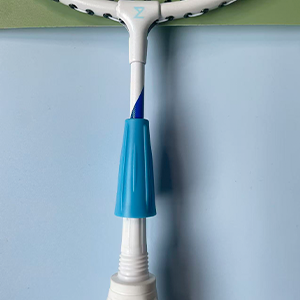
Tennis racket balance is one of the most important equipment factors influencing how a racket feels, moves, and performs during play.
For players, coaches, and tennis equipment buyers, understanding how tennis racket balance affects swing speed can help improve
shot generation, control, comfort, and overall court performance. While string pattern, head size, weight, and grip size all matter, racket
balance has a direct impact on how quickly a racket can be accelerated through the hitting zone.
In simple terms, racket balance describes where the weight of the racket is distributed. A racket can be head-light, evenly balanced,
or head-heavy. This balance point affects maneuverability, perceived heaviness, rotational inertia, and the ease of generating racket
head speed. For many players, especially those who want faster swings and quicker reactions, balance is just as important as total racket weight.
This guide provides original, SEO-friendly, and industry-focused information about tennis racket balance and swing speed. It is written
for use in blog posts, directory pages, category pages, and industry pages, with clear structure, keyword-rich sections, and practical tables.
The content is general-purpose and does not include brand or company recommendations.
Tennis racket balance refers to the distribution of mass along the length of the racket. A balance point closer to the handle means the
racket is head-light. A balance point near the center means the racket is even-balanced. A balance point closer
to the head means the racket is head-heavy.
The balance point is usually measured in inches or centimeters from the butt cap of the racket. It can also be expressed as points
head-light or head-heavy. This measurement helps players understand how the racket will move during a swing and how easy it will be to
control, accelerate, and recover between shots.
| Balance Type | General Feel | Swing Speed Effect | Typical Use |
|---|---|---|---|
| Head-Light | More maneuverable, quicker through the air | Usually increases swing speed potential | Fast strokes, net play, advanced control-oriented players |
| Even-Balanced | Neutral, stable, balanced feel | Moderate swing speed performance | All-around play, balanced control and power |
| Head-Heavy | More mass in the head, stronger plow-through | Often reduces quick swing speed but may increase momentum | Power-focused strokes, beginners, baseline stability |
How tennis racket balance affects swing speed comes down to physics, leverage, and feel. Swing speed is not only about how
hard a player tries to swing. It is also influenced by how much effort is required to move the racket through space. A racket with more
weight toward the head can feel slower to accelerate because more mass is located farther from the hand. A racket with a head-light balance
generally feels easier to whip, especially on fast forehand and backhand motions.
Swing speed is closely related to a racket’s rotational characteristics. When mass is distributed farther away from the hand, the racket’s
rotational inertia increases. Higher rotational inertia means the racket resists being turned, which can slow the initial acceleration and
make quick changes in direction harder. On the other hand, head-light rackets reduce resistance to rotation and often allow faster racket
head acceleration.
However, swing speed is not only about raw speed. A racket that is easy to swing may produce faster hand speed, but a slightly heavier or
more head-heavy racket may generate more momentum through the contact zone. That is why the ideal balance depends on playing style,
technical ability, strength, and court position.
Understanding racket balance and swing speed becomes easier when you look at the basic mechanics:
These factors work together. A tennis racket does not simply swing “fast” or “slow” based on balance alone. Instead, balance changes how
efficiently a player can create racket head speed, whether from a compact preparation or a large, full stroke.
Head-light rackets are often preferred by players who value quick acceleration and easy handling. Because more weight is located closer to
the hand, the racket feels more agile and responsive. This balance style is commonly associated with better maneuverability at net, faster
reaction time on returns, and easier wrist and forearm control during rapid exchanges.
For many players, a head-light tennis racket can increase perceived swing speed, especially when using modern topspin mechanics or compact
strokes. The racket can be whipped through contact more easily, which may help generate faster racket head speed without excessive strain.
Head-light balance is often beneficial for:
Even-balanced rackets offer a middle ground between maneuverability and stability. Their weight distribution is more neutral, so they usually
provide a blend of control, power, and swing comfort. For many players, this balance type supports a consistent swing speed without feeling
overly sluggish or overly light.
An even-balanced racket can be a strong option for players who want versatility. It may not feel as quick as a head-light frame during
rapid acceleration, but it often offers a more stable response at contact and can support a wide range of stroke styles.
Even-balanced rackets are commonly suitable for:
Head-heavy rackets place more mass toward the head, which can add power and stability at contact. These rackets may feel slower to swing
because the head carries more weight, increasing resistance to movement. As a result, they can reduce the ease of producing very fast
racket head speed, especially for players with shorter or less developed swings.
That said, head-heavy rackets can still be effective for certain players. The added mass in the head helps transfer momentum into the ball,
which can be useful for baseline hitting, defensive shots, and players who rely on added pop rather than extreme swing velocity.
Head-heavy rackets may suit:
Tennis racket balance is often confused with swing weight, but they are not the same. Balance point tells you where the racket’s mass is
centered. Swing weight describes how heavy the racket feels when moving it through a swing. Two rackets can have the same static weight and
very different swing weights depending on how the mass is distributed.
For example, a racket with a head-light balance may have a lower swing weight and feel easier to accelerate. A head-heavy racket may have a
higher swing weight and resist motion more strongly. This distinction is crucial when analyzing how tennis racket balance affects swing speed.
| Term | Definition | Why It Matters |
|---|---|---|
| Balance Point | Where the racket’s mass is centered along its length | Influences overall feel and distribution of weight |
| Swing Weight | How heavy the racket feels during motion | Directly affects acceleration and maneuverability |
| Static Weight | The actual weight of the racket without motion | Impacts comfort, stability, and overall load |
Swing speed is a major factor in tennis performance because it influences ball pace, spin production, timing, and shot variety. Faster
racket head speed can help players generate more topspin, add pace to serves, and create sharper angles. It can also improve the ability to
respond quickly to fast incoming shots.
Balance affects how efficiently a player can reach that speed. A racket that feels too head-heavy may slow down preparation and reduce
reaction efficiency. A racket that feels too light or too head-light may be easy to swing, but it may also lack stability if not matched
properly to the player’s technique and strength.
Players often choose head-light rackets when they want faster swing speed and easier control. The advantages include:
Although head-light frames often support faster swing speed, there are trade-offs. If a racket becomes too head-light without enough total
mass, it may lose plow-through and stability against heavy incoming shots. This can make the racket feel less solid on impact, especially
for players facing high pace.
In addition, a very head-light racket may require better technique to fully convert swing speed into power. Players who rely on natural
weight in the head for depth may need time to adjust.
Head-heavy rackets are not usually chosen for pure swing speed, but they offer benefits that many players value. These include:
The downside is that these rackets often move more slowly through the air, which can reduce swing speed and make it harder to react in
fast exchanges. This is why balance selection should always match the player’s style and goals.
Choosing the right balance for swing speed depends on several factors:
In general, players who prioritize swing speed should look first at head-light or slightly head-light balance. Players who prioritize
stability and power may prefer even-balanced or slightly head-heavy rackets. The ideal choice is the one that allows consistent swing
mechanics while minimizing fatigue and maximizing control.
The following table gives a general guide to common racket balance specifications and their expected influence on swing speed.
| Balance Specification | Approximate Feel | Effect on Swing Speed | Player Profile |
|---|---|---|---|
| More than 5 pts head-light | Very maneuverable, quick handling | High swing speed potential | Advanced players, net players, fast-swinging hitters |
| 3–5 pts head-light | Balanced maneuverability and stability | Above-average swing speed support | Intermediate to advanced all-court players |
| Even balance | Neutral and versatile | Moderate swing speed performance | General-purpose players |
| 1–4 pts head-heavy | Stable with added mass in the head | May reduce quick acceleration | Power-oriented and beginner players |
| 5+ pts head-heavy | Strong power-oriented feel | Lowest maneuverability, slower swing feel | Players needing extra assistance with depth and stability |
Balance is important, but it is only one part of the equation. Other tennis racket specifications also affect swing speed:
For this reason, players should consider balance as part of a complete racket specification profile rather than as a standalone metric.
The best swing speed outcome usually comes from a combination of suitable balance, manageable weight, and a frame that matches the player’s stroke style.
| Skill Level | Common Balance Preference | Reason |
|---|---|---|
| Beginner | Even-balanced or slightly head-heavy | Supportive feel and easier power generation |
| Intermediate | Even-balanced or slightly head-light | Good mix of control, speed, and forgiveness |
| Advanced | Head-light | Maximizes maneuverability and fast swing mechanics |
| Competitive tournament player | Custom-dependent | May require tailored balance for match-specific needs |
Yes, balance can be modified through customization in some cases. Small changes to the racket’s weight distribution can alter how it swings.
Adding weight to the handle may make a racket more head-light. Adding weight to the hoop may make it more head-heavy and stable, but often
slower to accelerate.
Customization should be approached carefully. Even minor changes can affect timing, spin, and comfort. For many players, the best approach is
to test different balance styles before making permanent modifications.
Tennis racket balance affects swing speed by changing how easily the racket accelerates, rotates, and recovers during play. Head-light
rackets generally support faster racket head speed and greater maneuverability, while head-heavy rackets often provide more power and
stability but may feel slower in motion. Even-balanced frames offer a middle-ground option for players seeking versatility.
When evaluating how tennis racket balance affects swing speed, players should consider the relationship between balance,
swing weight, static weight, and playing style. The most effective racket is not always the fastest-swinging one, but the one that allows
consistent timing, efficient acceleration, and comfort throughout a match.
Tennis racket balance, swing speed, head-light racket, head-heavy racket, even-balanced racket, racket maneuverability, racket swing weight,
tennis racket specification, racket acceleration, racket head speed, tennis equipment guide, racket performance, tennis balance point.
The question of how tennis racket balance affects swing speed is central to racket selection. Balance determines how a racket
moves, feels, and responds during a swing. Head-light rackets typically allow faster acceleration and easier handling, even-balanced rackets
provide a neutral and adaptable feel, and head-heavy rackets add stability and power at the cost of quickness. Choosing the right balance
means aligning the racket’s design with the player’s technique, strength, and performance goals.
For tennis content pages, this topic is highly relevant because it connects technical equipment language with practical playing benefits.
Whether the goal is faster swing speed, better control, or improved stability, racket balance remains one of the most important
specifications in tennis gear selection.
```
This website uses cookies to ensure you get the best experience on our website.


 Español
 Pусский
 Français
 日本語
日本語 한국어
한국어 العربية
 हिन्दी
 Tiếng Việt
 中文
中文



 Phone
Phone
Comment
(0)